


You’ve probably heard of Iberia and Air Europa, two Spanish airlines with an extensive network linking Europe to Latin America. But there’s a third airline in Spain which, over the last few years, has also been quietly building a long-haul network spanning both sides of the Atlantic.
Iberojet has roots in the vacation charter and ACMI business, and this line of work is still a major part of its workload, but the airline of the Avoris Group (one of Europe’s largest tour operators) has spotted an opportunity flying to places no one else does. And what’s more, it is doing so with a shiny new fleet increasingly built around Airbus A350-900 and A330-900neo aircraft.
As Iberojet prepares to add new destinations to its network, including El Salvador (SAL), which will be served from both Barcelona (BCN) and Madrid (MAD) from September 2026, AeroTime took the opportunity to speak with its Accountable Manager, Alberto López, to discuss the carrier’s business model and its plans for the future.
López, formally an aerospace engineer and commercial pilot, has held different managerial positions at Iberojet, an airline which was created in 2020 when vertically integrated tour operator Avoris merged its Spanish and Portuguese charter airlines, which were called Evelop and Orbest, respectively.
That corporate decision was accompanied by another transformative choice: the move into the scheduled flights market.
“Our current business model is hybrid,” said López. “We do have a well-defined and established regular flight business while also continuing to run what has historically been our main activity, the operation of vacational charter flights. And we also have an ACMI business which is a small percentage of our total business right now, because we are short of fleet.”
López explained that the scheduled and charter operations represent around 70% of the business, with the remaining 30% generated by the ACMI business.
Iberojet acts, in fact, as an umbrella commercial brand. When the Avoris Group merged Evelop and Orbest, both their Air Operator Certificates (AOC) were retained. So, Iberojet’s fleet is technically divided between a Portuguese and a Spanish entity, operating out of bases in Lisbon (LIS) and Madrid (MAD), respectively.
As of August 2026, Iberojet operates an all-Airbus fleet with a total of seven aircraft: two A350-900s, two A330-900neo, one A330-300 and an A320. The latter, the only narrowbody aircraft in Iberojet’s fleet, is fitted with a single class cabin with 180 seats and used during the summer to serve destinations across Europe and North Africa. In winter it primarily serves the needs of Spain’s “Imserso”, a government-sponsored program of tourism for pensioners and the elderly.
The widebody fleet, however, is the backbone of the business. Classical year-round warm weather destinations in the Caribbean, such as Cancun (CUN), Mexico, and Puerto Plata (POP), in the Dominican Republic, used to be Iberojet’s bread and butter and its two preceding constituent airlines. The carrier often used to fly to Cuba, as well.
“We decided to drop Cuba after the pandemic for profitability reasons,” López explained.
The growth of Iberojet’s scheduled business
The growing number of Latin American residents in Spain gave Iberojet the opportunity to diversify its business and, at the same time, open up new destinations for a younger and more adventurous generation of European travelers.
In the last few years, Iberojet has launched nonstop services between Spain and Honduras, Costa Rica and, starting in September 2026, El Salvador.
“It all started after COVID-19. In November 2020, when we reactivated, the migratory flow between Spain and South America had remained stagnant for quite some time,” López said” Lots of people had been left stuck and we saw an opportunity to reconnect those flows between Europe and Central and South American countries.”
“Of course, that type of passenger isn’t the vacation-type passenger we’re used to,” López added, referring to the strong ethnic traffic component that underpins some of those routes.
The fact that two larger Spanish airlines, Iberia and Air Europa, have fairly extensive networks in Latin America does not concern López, who highlighted Iberojet’s different approach to those markets.
“We are not getting into conflict with those other carriers because we operate at airports where they don’t operate,” López said. “For example, in Honduras we fly to Palmerola International Airport (XPL), instead of San Pedro Sula (SAP), which is the airport Iberia and Air Europa fly to [Palmerola airport opened in 2021. San Pedro Sula was traditionally the main international gateway to Honduras – ed. note].
“There can be, of course, destinations with some overlap, but we don’t clash much, also because we either operate on different days of the week or because our fares don’t conflict with those of Iberia or Air Europa.”
“We’re not their competition,” he added. “We don’t bother them much.”
Iberojet also operates between Madrid and Bangkok (BKK), another market in which it faces no competition.
As a relative newcomer to the scheduled flight market, Iberojet faces other types of challenges, for example, how to pivot from a distribution model based primarily on travel agencies in Spain and Portugal, to one in which direct-to-consumer sales play a much bigger role.
“Selling directly to the public is a challenge. We have synergies with the rest of the group, which has its own distribution networks, but those are designed for tour operation, which leaves us little margin,” López said. “So, we try to drive sales through our own website. We do our own advertising and, little by little, we’re building our presence in the market niches we’re working in, to gain more visibility.”
Delving into the margins issue, López explained how in the vacation charter market, competition is mostly based on price, even if the dynamics and product on offer are not exactly like those of low-cost airlines.
“From our management standpoint, we try to give them the maximum of everything we can afford at that price,” he said. “It is fairly basic, so to speak, but it’s not a bare-bones service where you need to pay for everything extra you add.”
In fact, one of Iberojet’s A330-900neo aircraft is equipped with a proper business class cabin.
“We have one aircraft, an A330-900, that has 18 seats in business,” López said. “We use it to operate scheduled services. But having this configuration, we also get many requests for ACMI missions because many companies want a dual-class aircraft.”
This cabin appears to have been successful. López explained that the airline is looking to add business class to two more aircraft.
“We have a project for summer 2027 where two of the aircraft will move up to a cabin configuration quite similar to what we currently have,” he said “Our intention is to always have a minimum of seven long-haul aircraft. So, we’re actively searching for two aircraft. And I can tell you they’ll be A330s.”
“Our idea is to have maximum commonality across the long-haul fleet for interchangeability,” he added. “We have several options on the table, and we’re constantly evaluating options from a commercial and economic standpoint to see whether they work for us.”
López declined to mention a specific timeframe for this due to the current conditions in the aircraft market.
“The idea is to bring in those two aircraft as soon as possible. But today I can’t tell you exactly when because the A330 aircraft market is quite congested,” he said. “Plus, the engines we want for those A330s, the Trent 7000, which are the ones we have experience with and that we consider the most reliable, are also the ones currently in highest demand.”
A350 vs A330neo: pick your fighter
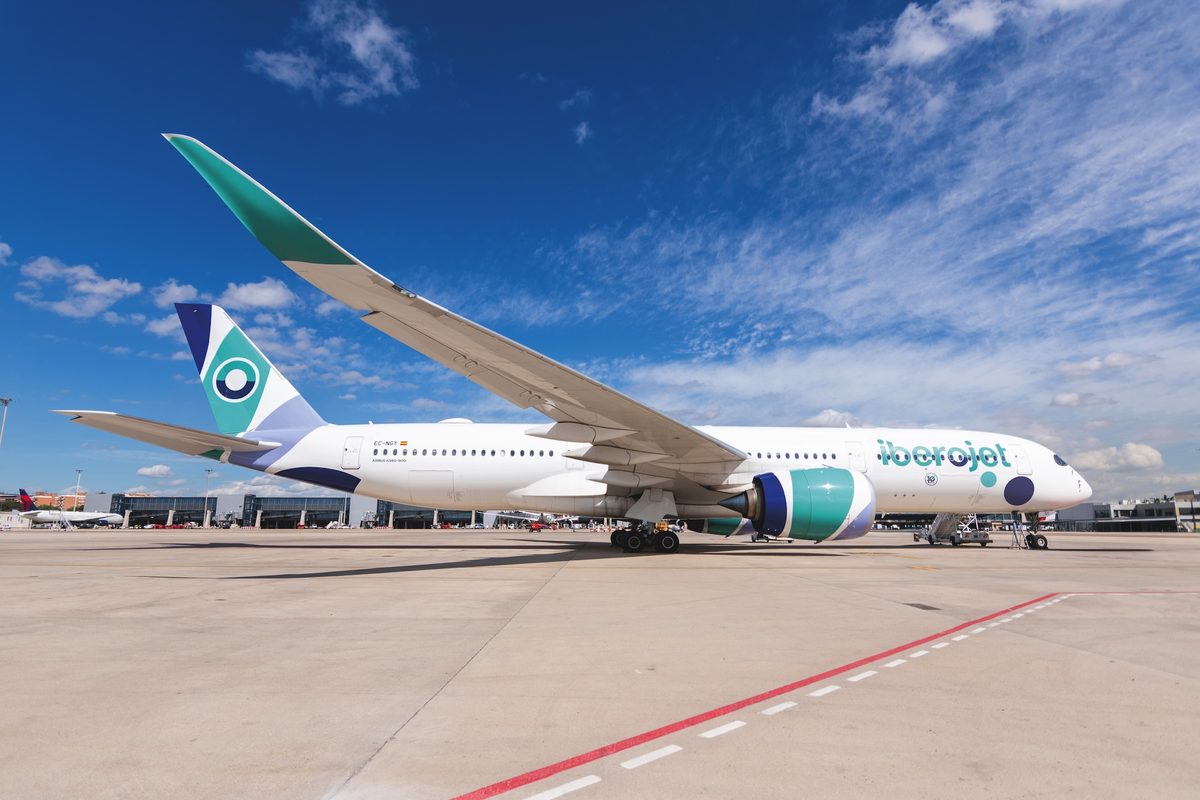
López explained the reasons behind the choice of aircraft.
“If we had a single business model, the aircraft I would ask for would absolutely be the A330, for everything. It’s very versatile, with very reliable engines [the Rolls-Royce Trent 7000 – ed. note], and much more economical,” he said. “That is, if we are talking of a range of around 11 hours where there aren’t so many performance issues, which covers 80% of the network, then you can use the A330.”
But as it turns out, things are a bit more complex.
“What happens is that, generally, our scheduled routes, and what tour operators ask from us, tend to be destinations our competition can’t reach. If we go east, it’s a 13–14-hour flight, and an A330 can’t get us there, even with a central tank,” López explained. “An A330-200 could make it, but with a restricted passenger count. So, if we want to go to Asia, to fly beyond 12 hours, we need the A350. And if we go to South America, to places with little competition, those tend to be airports with high elevation and high temperatures, so the A350 is also the aircraft for that.”
López praised the A350, although he appears to like the A330 as the airline’s workhorse.
“If I were a pilot, I’d choose the A350 because you can use it for any mission. But as a manager, I’d tell you [that] it’s the aircraft that’s hardest to maintain year-round; you need to be able to fill it all year round for the numbers to add up,” he said. “As a manager, the aircraft that makes sense to me is the A330. Right now, with the business models we have, none of them is versatile enough for everything.”
With both aircraft in the fleet, Iberojet has greater options when it comes to adding new destinations.
“For the past couple of years, we’ve been trying to launch one new destination every year, when we can clearly spot a business opportunity, whether it leans towards the vacation or the ’ethnic’ sides of the market,” López said.
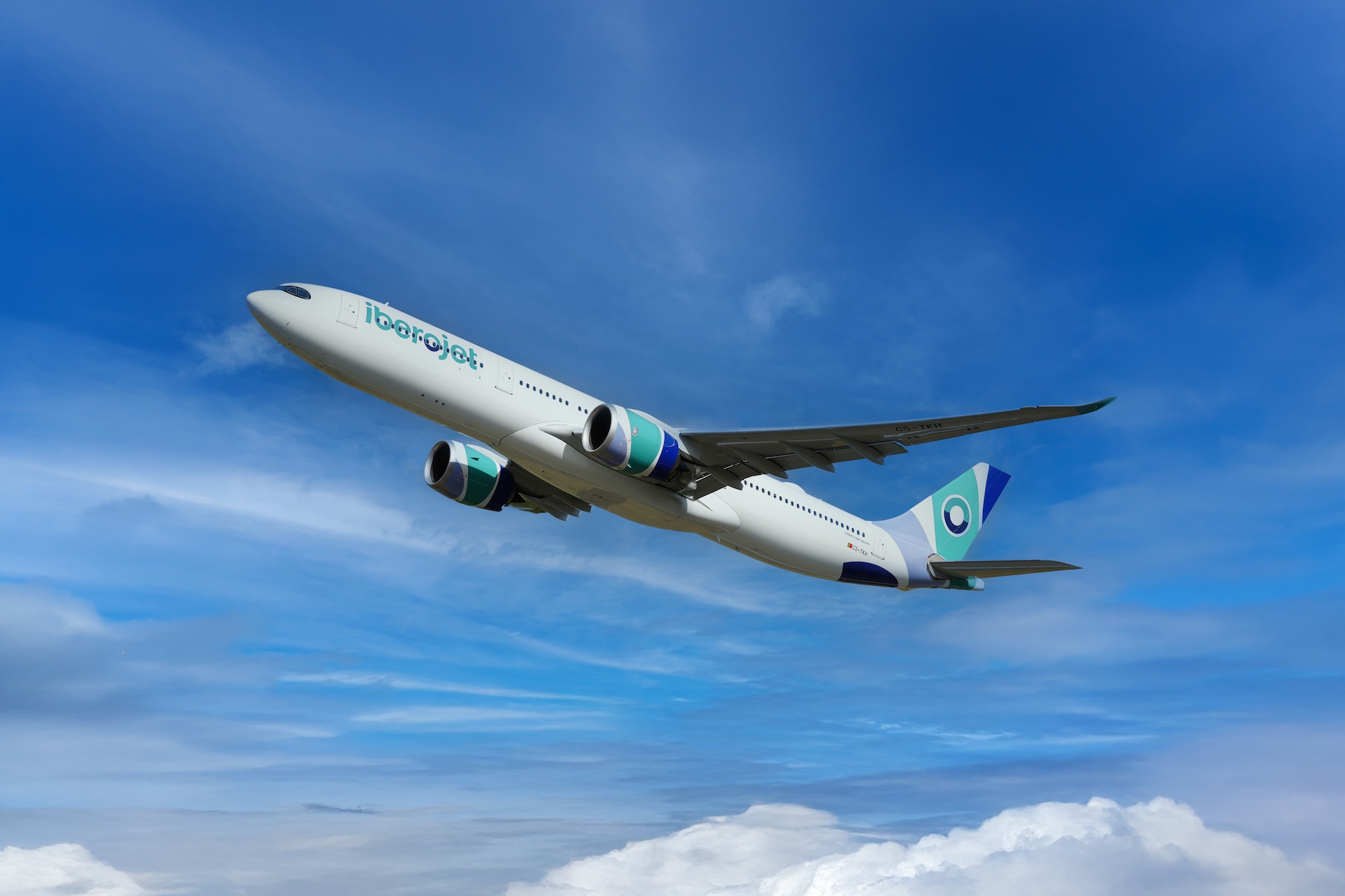
So, what’s next?
“When it comes to connecting Europe with South America, we have two quite feasible routes we could open up to Colombia, such as Cartagena de Indias. Bogotá and Cali are already quite congested, so we’re not considering those,” López explained. “And we have other Central American destinations under consideration, such as Nicaragua, which we’re evaluating; and Bolivia, offers also quite a few possibilities.”
The Madrid to Latin America market is not the only growth vector, though. López is also looking east.
“We’re considering some destinations in Asia, using the A350, which is the type of aircraft that can connect them to Madrid directly with 10, 11 or 12 hours of flight.”
López also mentioned the launch of new routes out of Barcelona.
“We’re also betting heavily on Barcelona (BCN). We have the ethnic, Barcelona to Honduras route. Today we have one weekly frequency, which might become two in summer,” he said. “That’s a triangular route. The aircraft does Madrid-Palmerola first, then returns Palmerola-Barcelona and Barcelona-Palmerola, to finally close the cycle with Palmerola-Madrid. That’s what is called a ‘W’ pattern, and we run it year-round. From September [2026] we’ll do the same with El Salvador (SAL). And then in summer we also try to connect with Barcelona with the usual Caribbean destinations.”
The future of tour operators
The scheduled flight business has given Iberojet fresh momentum. But what about its more traditional charter business? Is the tour operator model still valid in the era of internet distribution?
“Digital business is what dominates now, but we still have a significant share of customers who go to the agency and I think in Spain there’s still that feeling among many people that you have to sit down at a desk and see what they’re selling you and have trust in the person who is selling to you,” López said. “But the newer generations no longer go to agencies, digital business carries more and more weight.”
However, López did qualify this answer with some caveats.
“Young people still buy a lot of tour packages, and if they go to the Caribbean they also buy from the tour operator. What happens is they have a different way of seeing life, and someone who goes backpacking to Costa Rica has a different profile from someone going to Punta Cana or Cancún. Many young people travel a great deal, but they also go to the Caribbean.”
López went on to explain that the Caribbean, which used to be one of the firm’s traditional markets, is very price-driven. This is why the company sees South America and Central America as markets that enable it to guarantee its fleet will be kept busy and productive year-round.
“You have to reinvent yourself because it’s true that in the traditional tour operation, which is the vacation segment, there’s brutal competition,” he said. “If the same types of companies all fly to the same destinations, prices come down and, eventually, prices can’t go any lower because costs won’t allow it. So, you have to reinvent yourself, hence the development of the scheduled business and flying to places where we don’t have to be so focused on that price war.”
“Tour operation is going to continue to be necessary,” he added. “And what you have to do is adapt to the market and to the circumstances.”