

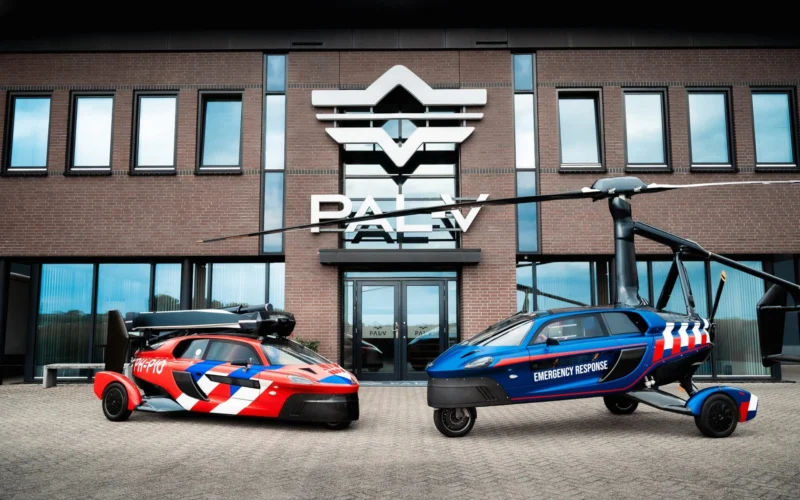
Dutch flying car developer PAL-V has reached a key certification milestone with the European Aviation Safety Agency (EASA), gaining approval to manufacture aviation products.
On September 7, 2026, PAL-V confirmed that it had obtained its European Production Organization Approval (POA), marking a “significant step toward bringing certified FlyDrive mobility solutions to market”.
According to PAL-V, it is the first FlyDrive developer within Advanced Air Mobility (AAM) to gain this approval, placing the company “well ahead of both American and Chinese initiatives within the sector”.
“Obtaining the POA is a major milestone for PAL-V,” Robert Dingemanse, the company’s CEO, said. “It confirms that we have not only developed a groundbreaking platform for FlyDrive products but have also built a world-class organization capable of developing, certifying and manufacturing airworthy products.”

According to PAL-V, the developer has now obtained “several critical certification milestones,” including the receipt of a ‘No Technical Objection’ statement from EASA in 2025.
“This milestone validates nearly two decades of development of certification experience and regulatory expertise that has established the company as the clear leader in the emerging FlyDrive market,” PAV-V said in a statement.
The company, headquartered in Raamsdonksveer, also holds automotive production approvals, allowing it to manufacture its products on an industrial scale.
PAL-V expects to make the first deliveries of its flying car in 2028. According to the company, it has a reservation portfolio sufficient to fill the first three years of production.
In March 2024, PAL-V received an order for 100 units of its flying car from Dubai-based Aviterra, an aerospace firm backed by the owners of executive aviation firm Jetex.
In flight, the vehicle has a range of 500 km, and it is capable of a maximum speed of 180 km/h.
PAL-V has said that it is not “simply developing a vehicle,” but rather “creating a new mobility category, building the capabilities required to commercialize it, and assembling the people who can make it a global success”.